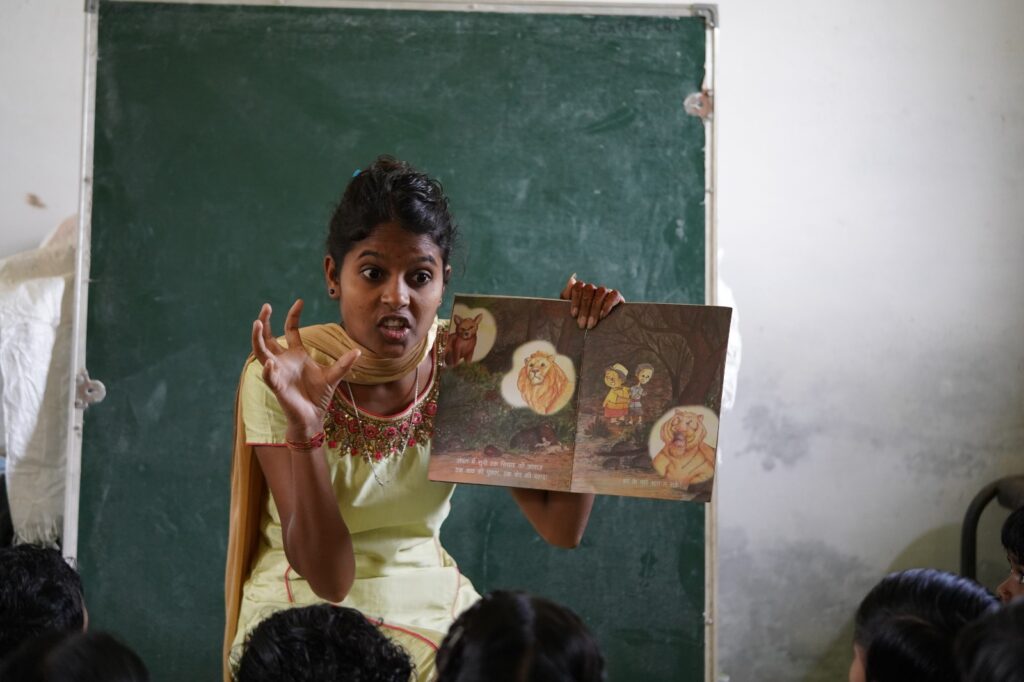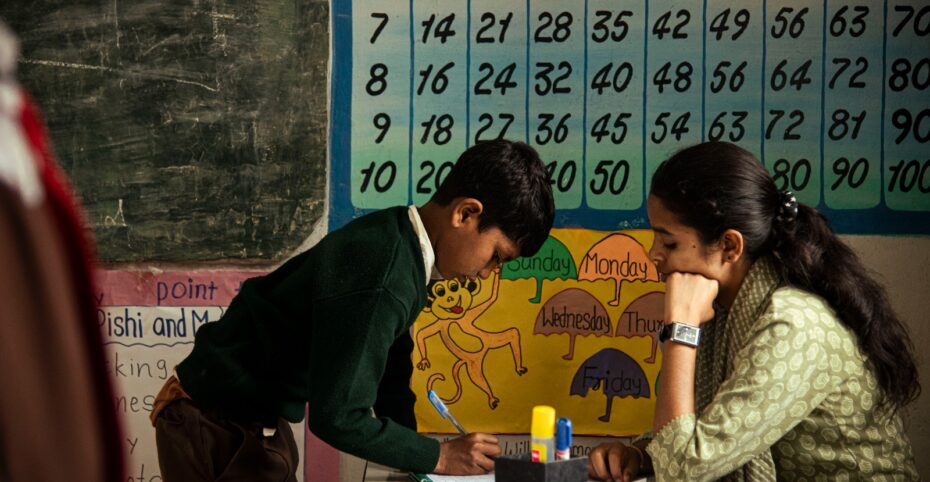
Malti didn’t join Earth Focus looking for a career.
She came from a village on the edge of the Kanha Tiger Reserve, where fields thin into imposing sal trees and the road transitions abruptly into a forest trail. Her family cultivated a small patch of land and gathered what the forest allowed: mahua in spring, bamboo in the months after the monsoon, and firewood through winter.
School had taken her as far as Class 12, but a lack of funds ended her formal education. For nearly two years, she stayed home. Mornings were consumed by fetching water and cooking; afternoons drifted by as she watched the light shift across the courtyard. Work, when it came, was seasonal and irregular—harvest labour, construction site labour, or forest produce collection. There was no plan beyond the next day.
When Earth Focus began work in the region, her name surfaced not through an office recruitment drive, but through a Mata Samiti meeting. One neighbour mentioned she was literate; another noted she was looking for work. That was enough to bring her into the programme.
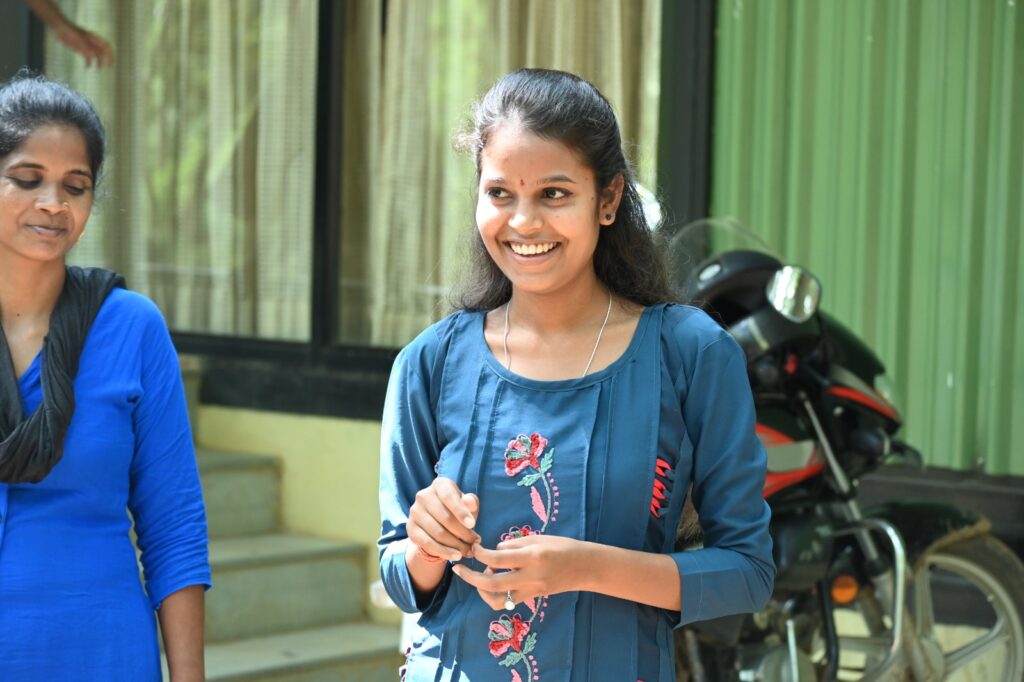
Starting from Scratch
She joined in 2021 as a shiksha prerak. Her day began before the government school opened. From 8 a.m. to 10 a.m., she worked in the Anand Ghar, a borrowed classroom where children arrived barefoot and half-awake, some with younger siblings in tow. After that, she crossed to the anganwadi to work with younger children until noon.
She first learned how to stay—how to keep children in one place when goats wandered in and out, and how to begin again when attendance thinned during sowing season. She learned to teach when the room changed daily, sometimes full and sometimes echoing.
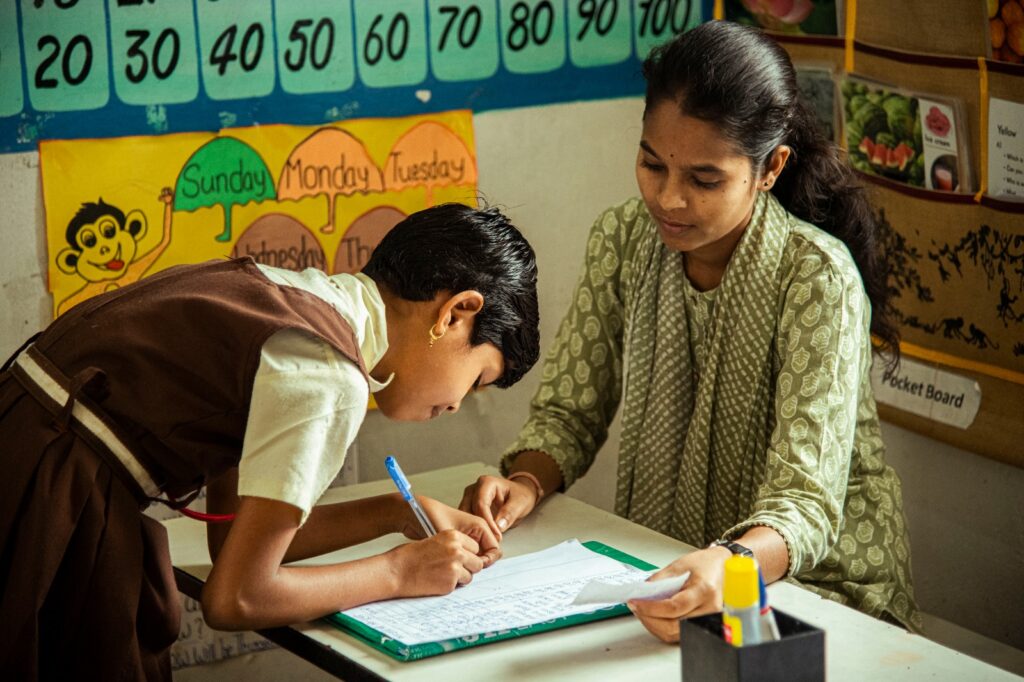
But Malti entered more than just a classroom; she entered a capacity-building system. Earth Focus does not assume its field workers arrive prepared; it assumes they arrive local. The rest is built slowly through observation, repetition, feedback, and responsibility.
New shiksha preraks first learn the texture of the place—the way the school day bends around farm work, how children disappear during migration, and how the monsoon reshapes attendance. They learn the ground before they are asked to lead it.
Growing into Leadership
Malti spent her early months observing others. Mentors observed her sessions, and together they revised the materials. Her progress was not counted in certificates but in continuity: whether she came daily, whether children stayed, and whether learning held.
After six months, she was running sessions on her own. Her role widened without announcement. She began visiting homes when children stopped coming and prepared teaching materials in the evenings. She travelled between villages, and two hours of teaching became a full working day shaped by coordination and community trust.
The organisation noticed, and she was promoted to educator. Now her work turned outward. She trained new shiksha preraks, spoke in village meetings, and kept records. She moved between villages where schools stand between cultivated fields and forest lines. The work demanded new competencies: engaging adults, resolving conflict, and managing time and distance. She bought a scooter.
By the time she left the educator role, she had completed her graduation in Hindi and had already trained several shiksha preraks who were subsequently promoted. Leadership was no longer imported; it was being generated from within.
Building the System Around the Work
Malti’s story reflects both the possibilities and the constraints of working within the existing education system. Earth Focus delivers its programmes through government schools and anganwadis, and as the work expanded, the fixed structures of this system began to shape outcomes on the ground. While local youth stepped into classrooms and community roles with commitment, training differed across villages, progression depended on circumstance, and leadership development remained informal. Community engagement, too, varied—parents questioned unfamiliar methods, and farmers often disengaged once initial momentum passed. Sustaining quality within this context required a more deliberate investment in people.
Earth School was Earth Focus’s response. Designed as a capacity-building initiative across education and nature-based livelihoods, it brings structure to how local educators, agroforestry practitioners, and outreach staff are recruited, trained, assessed, and supported over time. Through modular curricula, mentoring, trainer-of-trainers models, and defined career pathways, learning is embedded within daily fieldwork rather than separated from it. The result is a growing, locally rooted workforce—one capable of holding classrooms, engaging communities, and stewarding landscapes—so that trajectories like Malti’s become expected rather than exceptional.
The Pathway to Sustainability
Today, Malti works as a curriculum lead. She develops learning modules, conducts training, supports educators across clusters of villages, and works with government anganwadi staff. Her work no longer belongs to one classroom or one school. It belongs to the programme’s institutional memory—to what will be taught next season and how.
Her movement is not accidental; it follows a structured professional pathway. Earth Focus calls this pathway “The Earth School Journey,” a staged progression through which every shiksha prerak and samuday prerak moves—not by seniority alone, but by demonstrated skills.
Each role carries distinct responsibilities. Each transition depends on performance in real conditions: sessions delivered, villages supported, staff trained, and materials developed. Training is not separate from service delivery; it is embedded within it.
The model grows deliberately because the context requires sustainable systems, not rapid turnover. Earth Focus currently works across 39 villages, each with a primary school. Continuity matters more than speed, and trust is cumulative. Classrooms falter when people leave, and the Earth School Journey is designed to prevent that thinning.
As senior staff move into mentoring and training roles, new shiksha preraks are inducted beneath them. Capacity is not imported; it is layered. The workforce deepens instead of stretching thin.
Building for the Future
For partners who value rigour, the ladder is visible. Entry is defined, progression is staged, and outputs change with each role. Investment is linked to people as well as programmes—to how many are trained, how many are retained, and how many advance into leadership.
While livelihood is not yet the centre of this work, it has begun to appear at its edge. As preraks move through the pathway, they acquire transferable skills such as facilitation, documentation, coordination, and training. These are not only educational assets; they are professional ones. Over time, they create the possibility that teaching becomes not only a social contribution but economic stability.
Malti’s story is not presented as an exception, but as evidence of what becomes possible when fieldwork is treated as something that can be learned, deepened, and transmitted. What begins as a young woman learning to hold a room of children becomes, over time, a locally rooted, professionally trained workforce capable of teaching, mentoring, and designing curriculum.
It is built, season by season, in the same villages where the work must last.