

Restoration and the People Who Live Within It
The creation of the Yellowstone National Park in 1872 introduced a global model for conservation: preserving nature by excluding people from it. While this vision traveled across continents, its implementation often came at the cost of the Indigenous communities who once called those landscapes home.
Similar ideas found their way into colonial conservation policies in India. Forests that had long sustained local communities increasingly came under state control, while access to land and forest resources became more restricted.
The villages around Kanha National Park too carry some of that historical burden.
For Gond and Baiga families living here, forest-based livelihoods once formed an important part of everyday life. Over the past several decades, however, many households have had to find new ways of making a living. Livelihoods that depended upon forests became increasingly difficult following relocation from protected forest areas.
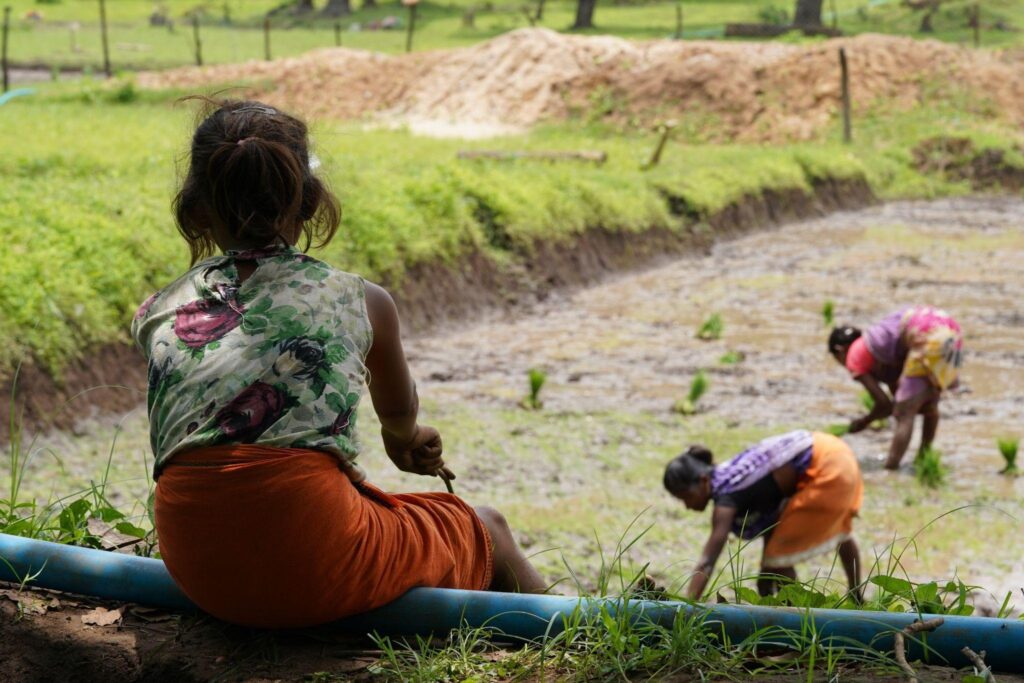
For many households, paddy cultivation became the primary alternative. Over time, large areas came to depend on a single crop. This shift towards monocropping left families vulnerable to erratic rainfall, pest attacks, and fluctuating market prices. Repeated cultivation of the same crop, often without sufficient investment in soil regeneration, also contributed to declining soil fertility and reduced agricultural resilience. Seasonal distress migration became a recurring reality for many families.
Restoration is therefore not only about forests, wildlife, or water. It is also about farms, livelihoods, and the possibility of making a living from the land.
How can degraded land become productive again? How can restoration generate reliable incomes? And how can communities become partners in conservation rather than bear its costs?
These are the questions that underpin a multi-year partnership launched in August 2025 between Earth Focus Foundation (EFF) and the A.T.E. Chandra Foundation (ATECF) across the Kanha landscape.
The Mechanics of Restoration: The Anatomy of a 51-Acre Intervention
Fifty-one acres can sound abstract on paper.
In practice, they are scattered across the villages of Gorakhpur, Dongariya, and Baherakhar in the Kanha landscape, where twenty farming households are working to restore degraded land while building more secure livelihoods.
The restoration process is centered on farms that are facing escalating environmental pressures. These lands, largely barren, are currently hampered by a combination of wildlife conflict, diminishing soil health and inconsistent water supply.
The work begins with protection.
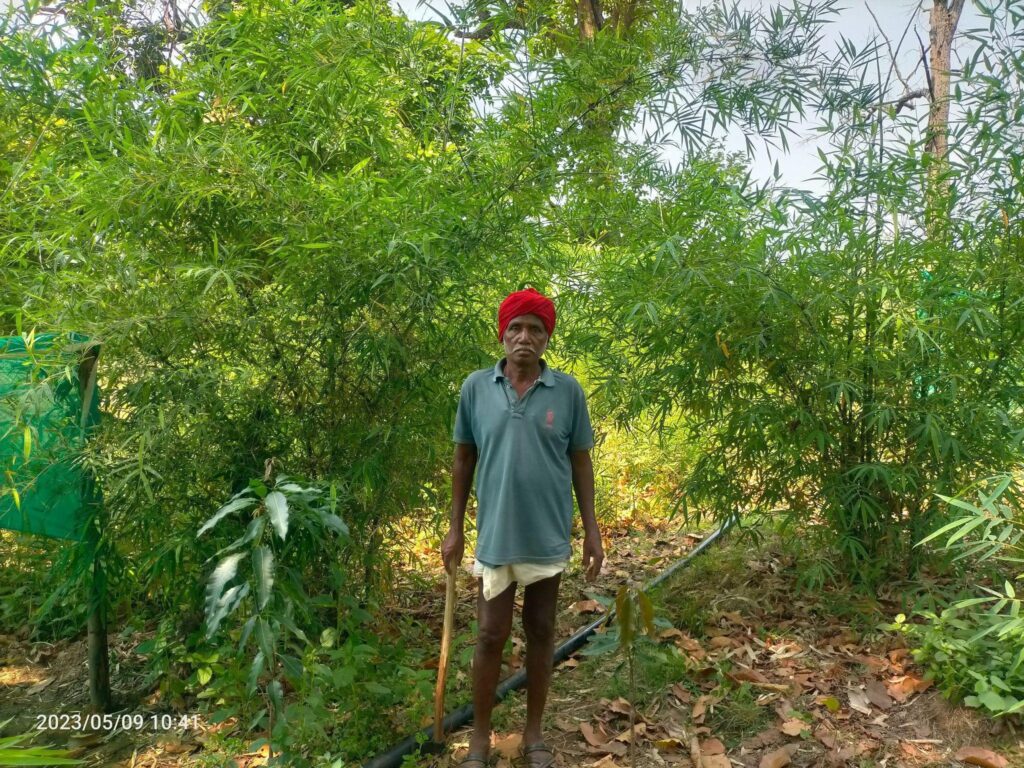
Many of these farms lie close to forests and wildlife movement routes. Crops and young saplings can be damaged by grazing livestock, deer, wild boar, and other animals moving through the landscape. Chain-link fencing provides immediate protection, while bamboo bio-fencing is established alongside it as a longer-term solution. As the bamboo matures, it gradually develops into a living barrier capable of protecting the farm long after the original fencing begins to deteriorate.
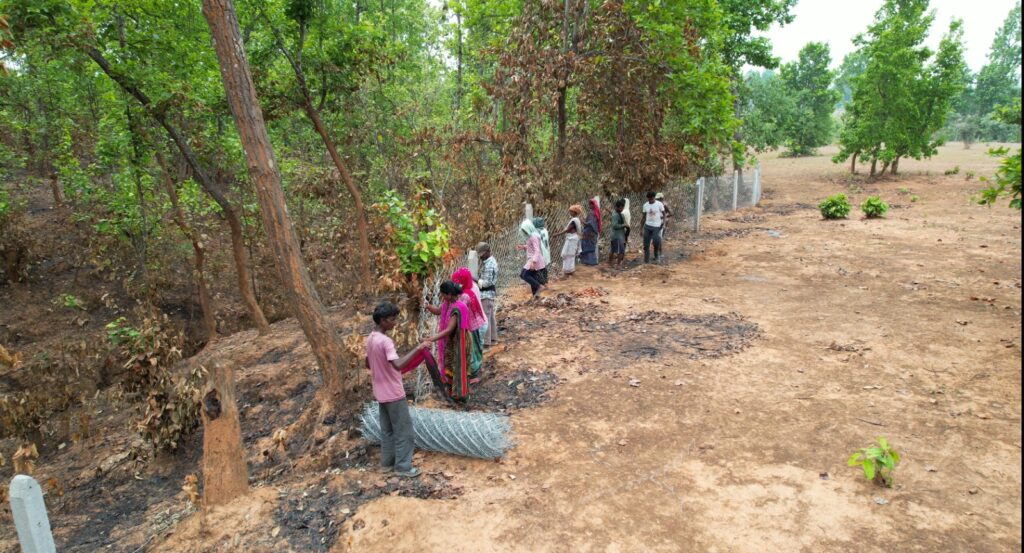
In several locations, neighbouring farms are brought together within a common protected area. This reduces the cost of fencing while allowing families to coordinate planting, share infrastructure, and manage adjoining plots collectively.
Water comes next.
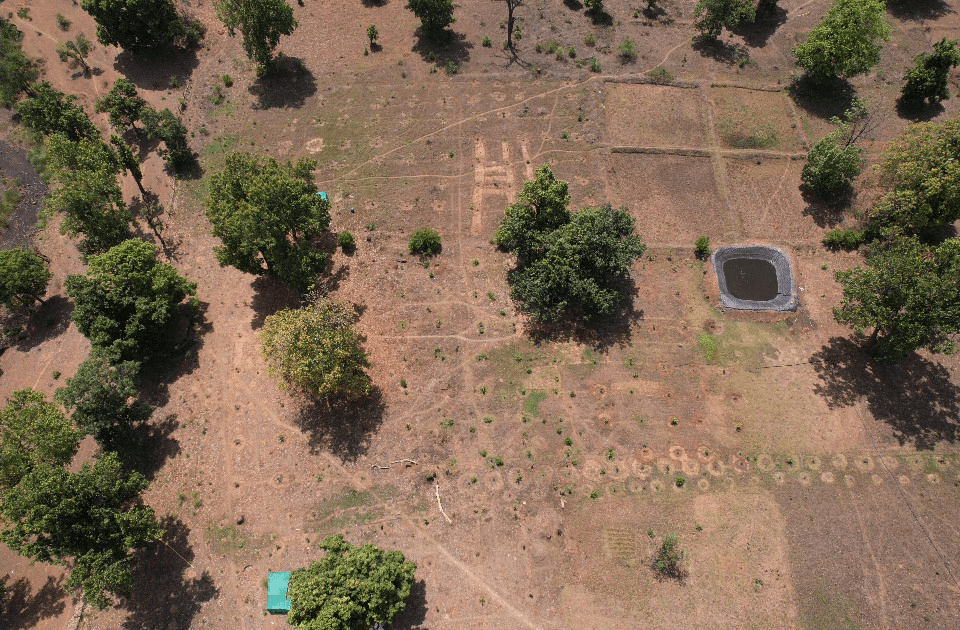
Like much of central India, Kanha receives most of its rainfall during a few monsoon months. A season may bring heavy rain, yet farms can still face water shortages later in the year. The challenge is not only how much rain falls, but how much of it can be retained within the landscape.
Farm ponds, pond linings, embankments, water pumps, sprinkler systems, and drip irrigation networks help capture, store, and distribute water beyond the monsoon months. Water budgeting exercises help families understand how much water is available, how it is being used, and which crops can realistically be supported through different parts of the year.
Only once these foundations are in place does attention shift towards rebuilding diversity within the farm.
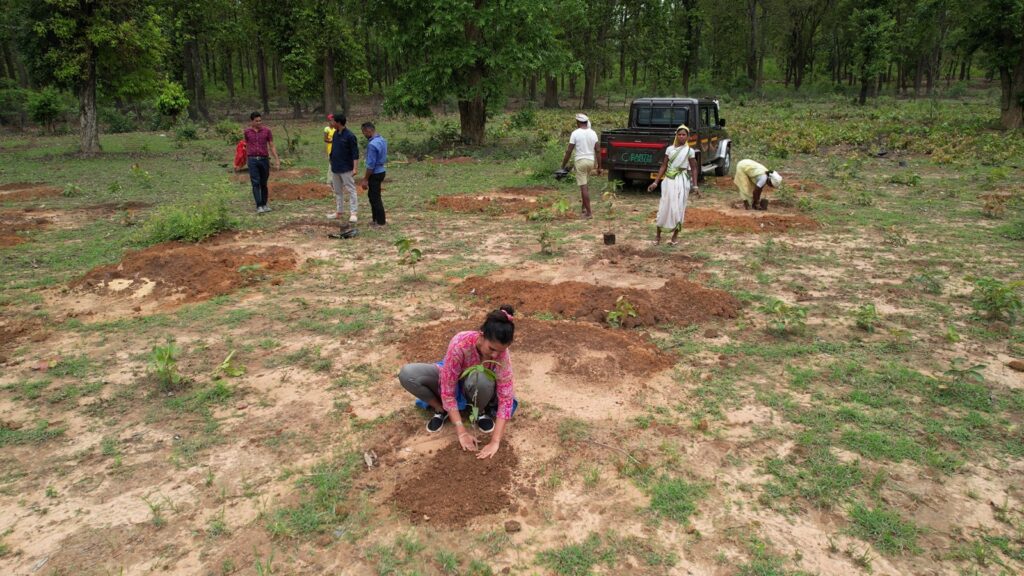
The process begins well before a sapling enters the ground. Planting pits are prepared in advance, organic manure is incorporated into the soil, and species are selected according to local conditions, water availability, and household priorities. Bamboo plantations are established alongside mango orchards and native tree species. Millets, pulses, oilseeds, vegetables, and other local crops are reintroduced into fields that have become increasingly dependent on a single crop.
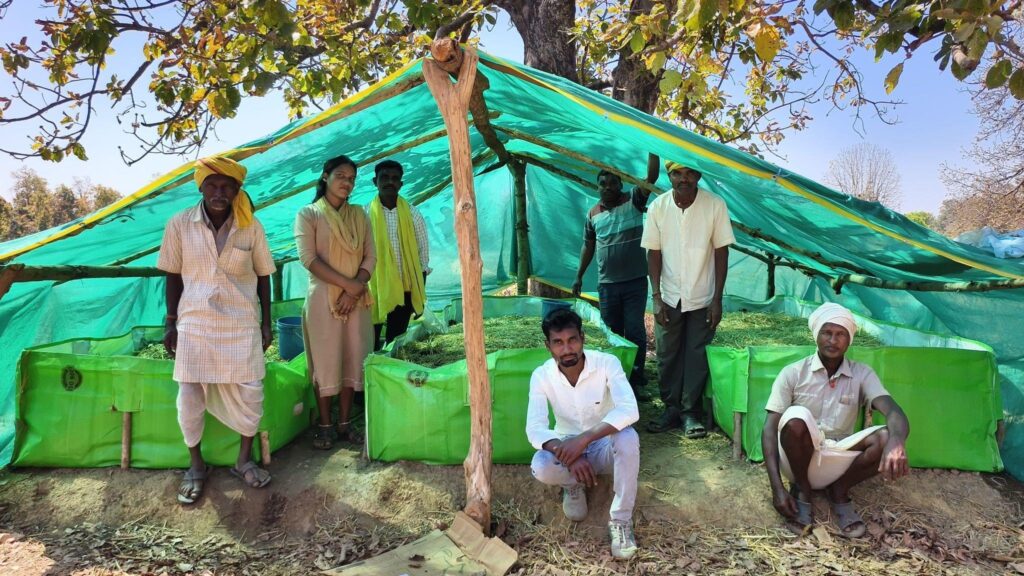
Soil restoration forms an equally important part of the intervention.
Compost pits, vermicomposting, mulching, and natural farm inputs such as Jeevamruth are used to improve soil structure, increase biological activity, and reduce dependence on purchased chemical inputs. The objective is not simply to increase yields, but to rebuild the ecological foundations upon which productive farms depend.
No two farms look exactly alike.
Families decide which crops, trees, and vegetables they wish to cultivate based on their needs, aspirations, labour availability, and local conditions. Technical recommendations are combined with local knowledge accumulated across generations of living and farming in the landscape.
Supporting this process are Samuday Preraks drawn from the local Gond and Baiga communities.
More than eighty percent of EFF’s team comes from the communities it works alongside. They help monitor plantations, facilitate access to government schemes, troubleshoot challenges in the field, and provide a bridge between technical planning and everyday realities on the farm.
The work is also closely monitored.
Baseline surveys, geotagged photographs, drone imagery, spatial mapping tools, and field-level data collection help track plantation survival, vegetation growth, water infrastructure, crop performance, and household livelihoods over time. The information helps identify challenges early, refine interventions where needed, and build a clearer understanding of how restoration is unfolding across the landscape.
The project may be measured in acres, saplings, ponds, and irrigation systems. On the ground, it takes shape through individual farms, individual households, and hundreds of decisions made season after season.
Supporting Restoration through Philanthropy
Landscape restoration rarely fits neatly within conventional funding cycles. Soil, water, trees, and livelihoods operate on timescales that often extend far beyond a single grant period. In that respect, restoration presents the kind of challenge that a portfolio approach is designed to engage with: complex, uncertain, and requiring sustained commitment.
For observers familiar with Amit Chandra’s philanthropy, the partnership is perhaps unsurprising.
Before becoming one of India’s most prominent philanthropists, Chandra spent decades in private equity. Over the years, he has argued that philanthropy can borrow some of the discipline of investing: identify promising organisations, support them over time, measure progress carefully, and concentrate resources where they can make a meaningful difference.
This thinking is reflected in what Chandra has described as a portfolio approach to giving. The Foundation’s publicly articulated framework broadly follows a 70/30 principle: most resources are directed towards organisations and approaches with a demonstrated track record, while a smaller share supports ideas carrying greater uncertainty and greater potential.
The partnership with Earth Focus Foundation reflects elements of both. It builds upon restoration practices developed through years of work in the Kanha landscape while also asking a larger question: can ecological restoration, livelihood generation, government convergence, community leadership, and careful measurement reinforce one another at a landscape scale?
Progress is closely tracked through robust monitoring & evaluation processes and technologies. The objective is not simply to implement activities, but to understand which combinations of interventions create durable improvements for both people and landscapes.
The Value of Staying
Farmers understand patience better than most.
Every growing season demands it. Seeds are sown months before a harvest arrives. A mango sapling may take years before it begins producing fruit. Soil fertility is rebuilt gradually. Water captured during one monsoon may reveal its value only several seasons later. Working with the land has always meant working with uncertainty and waiting.
The challenge is not that farming households lack patience.
It is that life rarely pauses while they wait.
School fees must be paid. Medical expenses arrive unexpectedly. Agricultural inputs need to be purchased. Household needs continue regardless of whether a bamboo plantation is ready for harvest or a young orchard has begun producing.
For many families, seasonal migration is not a choice made in pursuit of opportunity. It is often a strategy for survival.
This is where organisations such as Earth Focus, private philanthropies such as ATECF, and public programmes such as MGNREGA and the State Bamboo Mission become important. They help create the conditions that allow families to remain invested in the land while longer-term restoration efforts take root. Seasonal crops and vegetable cultivation continue to generate food and income even as bamboo, horticulture, and agroforestry systems mature.
Even then, outcomes are never guaranteed.
Rainfall patterns have become increasingly unpredictable. Market prices fluctuate. Pest attacks occur. Young plantations fail. Families face unexpected expenses. Restoration takes place within conditions that no project, organisation, or funder can fully control.
Patience, therefore, is not about waiting passively for results. It is about continuing to invest labour, care, and resources despite uncertainty.
Twenty households and fifty-one acres may seem modest against the scale of India’s environmental and social challenges.
Yet restoration always begins somewhere.
It begins in specific villages, on specific farms, with families willing to invest labour, time, and hope in land that has often yielded less with every passing year.
Gorakhpur. Dongariya. Baherakhar.
What happens on these fifty-one acres may ultimately matter beyond their boundaries. The methods, relationships, and lessons developed here have the potential to travel much further.
For funders, practitioners, and organisations seeking ways to support both conservation and community wellbeing, the work underway in Kanha offers a reminder that ecological restoration is ultimately carried forward by people willing to stay with the land long enough to see it recover.