
“What does education mean?”
The mother’s question hung in the air long after the conversation had ended.
It was put to Earth Focus’ founder, Vipul Gupta, during one of his early visits to a tribal village in the buffer zone of the Kanha Tiger Reserve, in the central Indian state of Madhya Pradesh. The exchange itself had begun simply enough. Gupta, an engineer and successful entrepreneur whose assumptions had been shaped far from these forests, asked the mother why her child was not in school.
“What school?” she replied.
He pointed to the only pucca building in the village. “The school.”
“For what?” she asked.
“To study,” he said.
“What is study?” she asked again.
He tried once more to explain. A child went there to be educated.
Then came the question he had not anticipated: “What does education mean?”
For Gupta, what had seemed a simple inquiry about school attendance opened onto something he had not expected. The exchange unsettled assumptions he had brought with him – that schooling needed no explanation, and that parents would naturally aspire to it. A question he had thought straightforward returned with meanings he had never considered, redirecting an urban, solution-oriented understanding of change towards something slower and more dialogic. It was, in time, one of the encounters that would lead him to establish Earth Focus Foundation and begin working on education in Kanha.
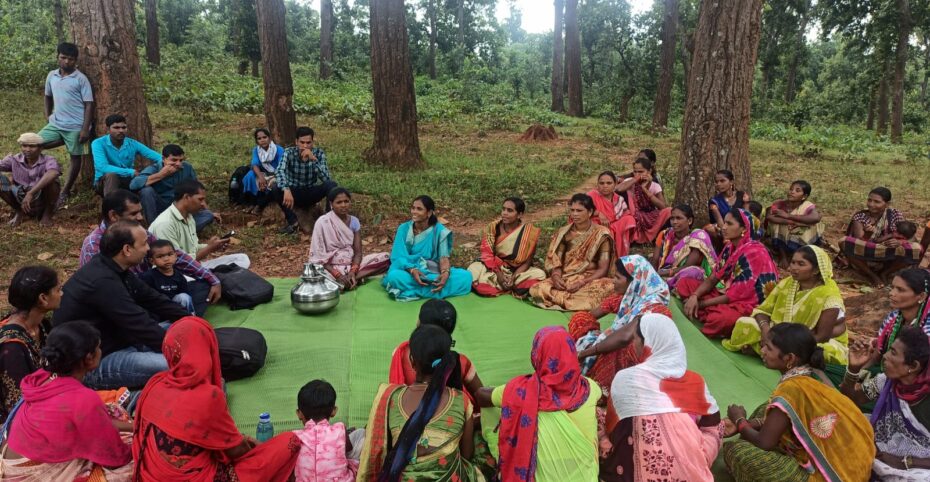
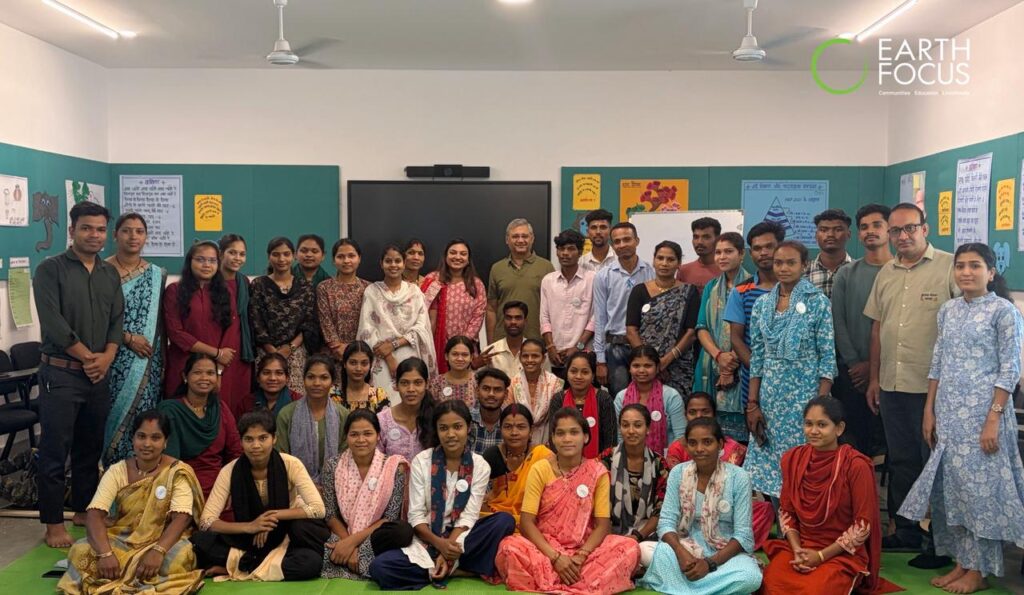
Today, that work has taken collective form. Across villages in the Kanha landscape, 39 active Mata Samitis bring together 907 mothers in what began as a series of conversations and has, in Gupta’s words, “become a movement.”
A New Public Through Dialogue
Communities in the Kanha buffer zone have long relied on their own forms of expertise – healers, hunters, animal carers, village knowledge passed from one generation to the next. People learned through life itself. Any serious engagement with formal education, Gupta has reflected, would have to begin with mothers and communities themselves.
The work began with conversation. Discussions with women centred first on concerns close at hand: food, hygiene, play,and early learning. In many villages, those conversations began at the Anganwadi – the village child-care centre – where expectant and new mothers gathered. There, women began asking questions of their own: how to engage with children at home, how dietary practices and everyday care shaped a child’s development, how learning might begin long before formal schooling.
As children began attending school more regularly, the question itself shifted. It was no longer only whether children went to school, but how the responsibility for education might be shared. From those conversations, the Mata Samitis began to take shape.
Mothers in the Classroom – and at Home
Mothers now spend time in school on a rotational basis, alongside Shiksha Preraks, (local learning facilitators). Some sit in classrooms during activities, while others contribute to what children learn, helping integrate culture, oral traditions and indigenous ecological knowledge into educational materials. Some help organise Bal Mela, where children come together to simulate real-world exchange by selling handmade crafts, while also participating in games and local performances. Others help organise Anand Utsav, a village-wide gathering with performances, stalls, games, activities, and Gond art competitions, often extending into a multi-village celebration. Participation, in this sense, has entered the terrain of knowledge-making, and even the shaping of contextual curriculum practices.
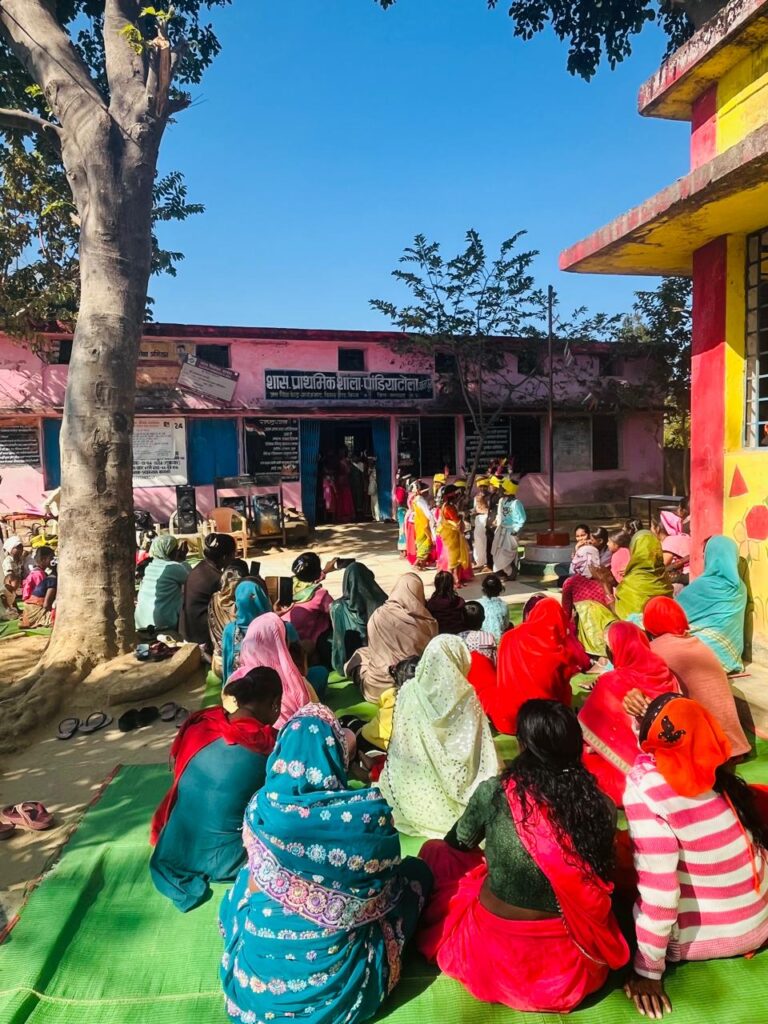
Mothers who once questioned the meaning of education now help guide its practice.
The role extends into the home. Across some 800 to 900 households, mothers support Shiksha Ka Kona – small learning corners – while children carry ideas from the classroom back into family life. Parents recall children urging them to avoid bathing in stagnant water, or, in one case, encouraging the family to begin collecting rainwater near the house.
“We had never thought like this before,” one mother said.
In Bhima village, another mother put it more simply: “Now my daughter teaches us not to cut trees and save water.”
Elsewhere, a family member said, with evident pride, “Now my son is teaching us that trees are important, not just wood.”
Taken together, the examples suggest education moving across generations – with mothers receiving, adapting and carrying it forward in family life.
Women Organising Among Themselves
The Mata Samitis have also altered relations among the women themselves. Mothers who were once largely confined to household spaces now communicate and organise more actively. Women who began with household concerns have moved towards shared concerns, in the process forming a collective presence in village life.
Often, that collective agency has taken shape through everyday problem-solving.
In Bhimlat village, 20 to 25 mothers responded to irregular school attendance by visiting homes themselves. Some brought mats and cloth from their own homes to improve seating in the classroom.
“If we don’t take responsibility, how will children’s education improve?” one mother said.
Attendance improved within two weeks.
In Gorakhpur, 15 to 20 mothers created a reading corner by pooling old books, notebooks and small contributions from households. “If we help together, it will become easier for children to study,” one of them said.
These cooperative efforts reflect a form of self-organised stewardship among the women of Kanha, emerging through their own initiative rather than formal institutional direction. In this sense, the Mata Samitis have begun to resemble gendered institutions of everyday collective life, where women build confidence, reciprocity and a shared capacity to act.
That collective agency has, in turn, begun to extend outward, towards the institutions of the state.
From Cooperation to Public Action
In Manjitola, the matter was the school floor. The surface had worn down over time – broken in places, dusty and uneven, marked by pits. Children sat through lessons on it, their clothes gathering dust. Mothers worried they could be hurt. There were too few tables for seating. Teachers had raised the issue more than once.
The Mata Samiti took it up. Women saw the condition of the floor for themselves and asked, “Our children come here to learn, but how can they study in such conditions?” They approached the gram panchayat – the village council – and submitted a signed application. They returned with follow-ups. In time, work began to lay new tiles in the school.
The children spoke of the difference in simple terms.
“Now we enjoy coming to school. It feels good to sit here,” one said.
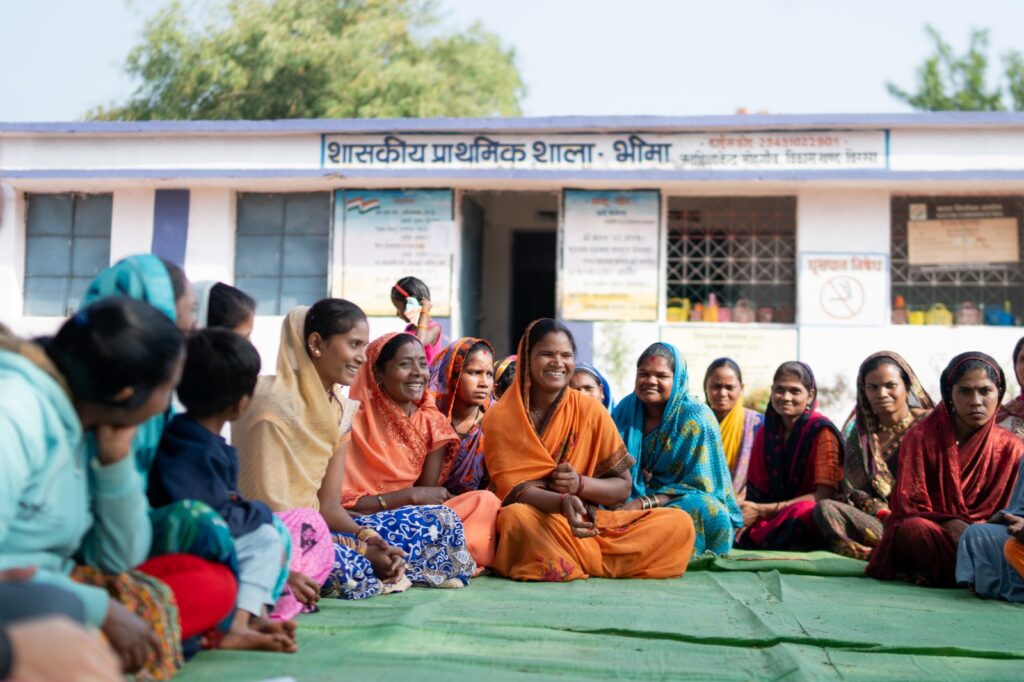
For the women, the matter left its own lesson. A problem encountered in the classroom could be carried into public institutions and pursued collectively.
In Bhima, the concern was more urgent. During the rains, the school roof had weakened to the point where mothers feared an accident. Then, during a lesson, part of the roof gave way. Tiles fell while the children were seated inside. For the women of the Mata Samiti, the danger had entered the classroom.
They first raised the matter through the panchayat. When little followed, they took it to the District Collector during a visit to nearby Chichrangpur. Repeated follow-ups led to repairs. When the rains returned, the teacher continued the lesson without interruption.
A repaired roof. A safer floor. These became part of what children saw when they watched their mothers act.
That, perhaps, is the larger point. Children learn through example as much as instruction. When mothers approach institutions, persist with follow-ups and improve the conditions of school, they make public action visible. Children carry that memory.
What the Dialogue Made Possible
The evolution of these Mata Samitis can be read alongside the decentralising spirit of the 73rd Constitutional Amendment, which in 1992 sought to devolve governance to the village level. Where the amendment opened the formal architecture, the Mata Samitis have opened spaces through which women exercise that agency collectively.
More recently, members have begun participating in digital literacy workshops focused on accessing government schemes, weather information, communication tools and other public resources through smartphones. The collectives, in other words, continue to widen the ways in which women engage public systems.
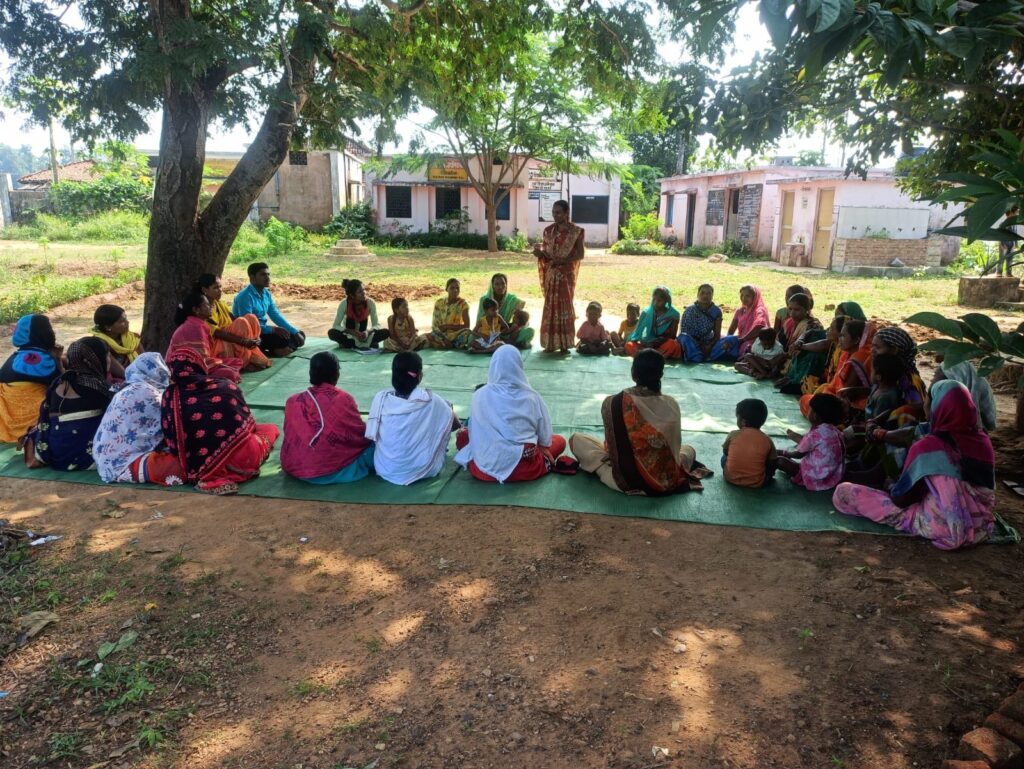
Asked what made the model distinctive, Gupta has pointed not to scale alone but to the model itself – the idea of communities producing, as he has put it, “change makers in their own landscapes.”
Seen in that light, the Mata Samitis are more than mothers’ groups attached to schools. They are a public – through which women help shape the institutions that affect their lives.
Part of the answer to the original mother’s question, perhaps, now lies here. Education opened a path through which mothers entered public life. And what began as dialogue has, in Gupta’s words, “become a movement” – a form of collective democratic action shaped, and sustained, by mothers.