
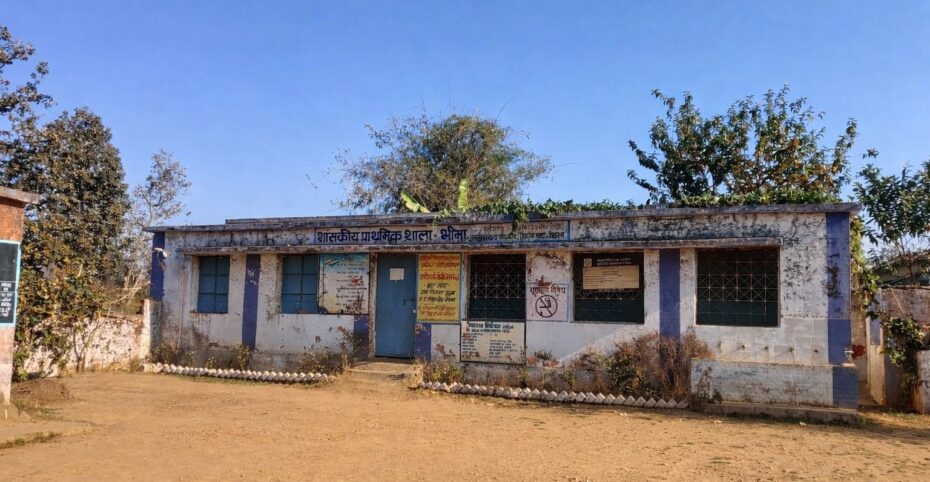
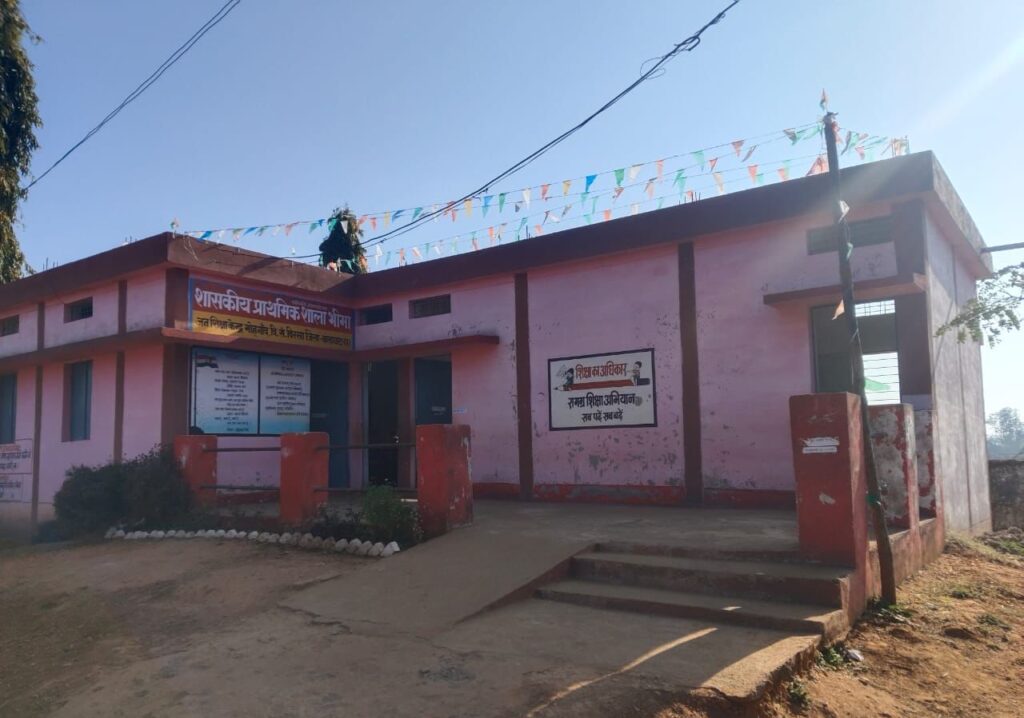
What began as a conversation about a leaking classroom in Madhya Pradesh became a catalyst for a wider process that has, over time, brought together over 1,000 mothers across 39 Mothers’ Committees – reshaping schools, homes and futures in the buffer zone of the Kanha Tiger Reserve.
For a while, the teacher in Bhima had developed a habit. In the middle of a lesson he would pause and glance up at the ceiling. The children had begun to notice. When the pause came, a few of them followed his gaze. Everyone waited.
Soon a drop would fall.
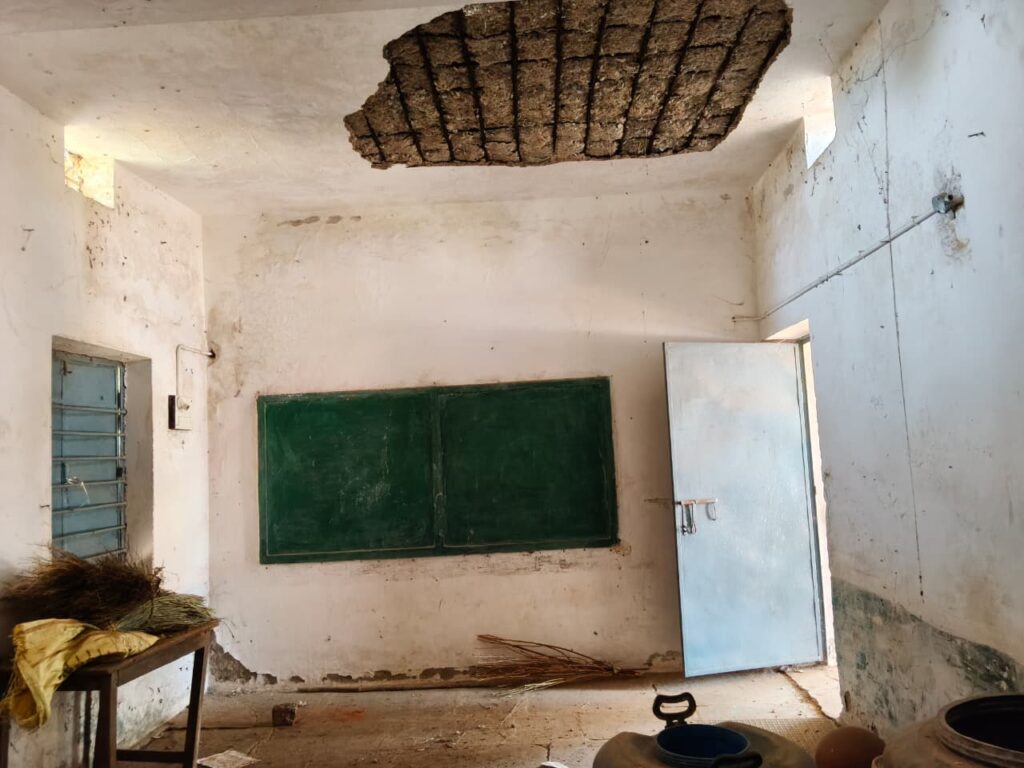
At first it appeared in one corner of the classroom. Then another. During the monsoon, rain slipped through cracks in the roof and marked the floor with small dark circles. Benches shifted slowly across the room as damp patches spread. Children lifted their notebooks away from the wet places.
The teacher tried to continue as long as he could. Eventually he closed the register.
“Come,” he would say.
The class gathered its books and stepped outside. Some days lessons moved to the Anganwadi, the village child-care centre nearby. On other days, someone in the village cleared space on a veranda where the children sat with their slates balanced on their knees. When the rain slowed, the class gathered beneath a tree.
School continued wherever there was dry ground.
Bhima sits at the edge of the Kanha Tiger Reserve in the central Indian state of Madhya Pradesh. In the mornings, children walk to school past fields and sal trees, sometimes stopping to point out animal tracks pressed into the dust.
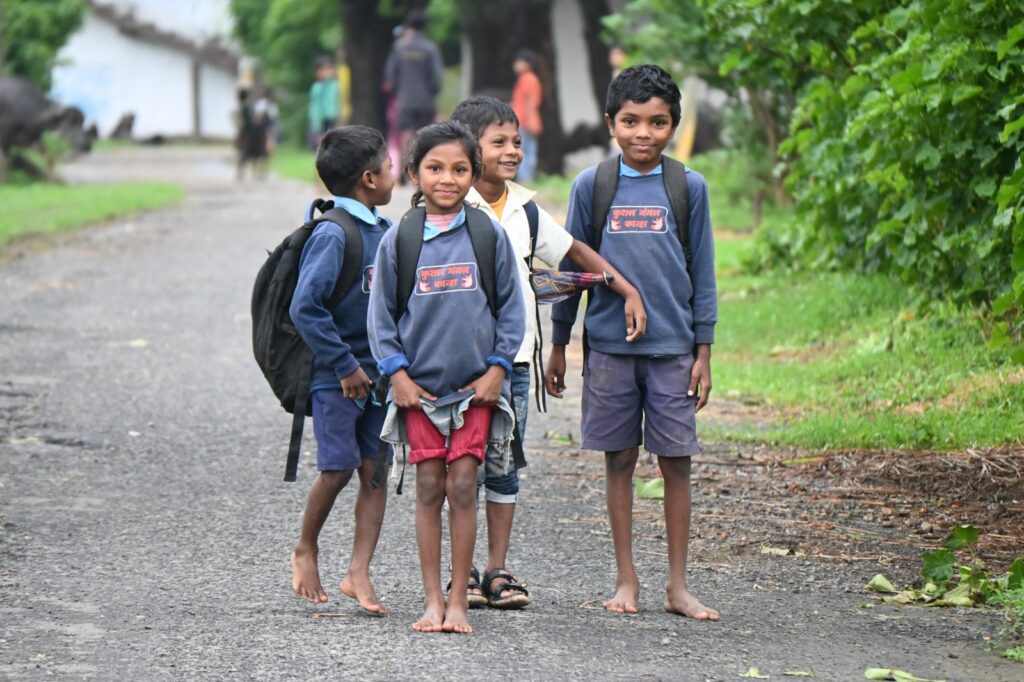
The school building had served the village for years, but the roof no longer held through the rains. Children began missing school more often. A few stopped coming regularly. Others appeared only when the weather held.
The disruption had begun entering conversations among mothers in the Mata Samitis – the Mothers’ Committees facilitated by the Earth Focus Foundation, a non-profit working on education and ecological restoration in the Kanha landscape. By then, the collectives had been gaining momentum through years of discussion around children’s learning, and the leaking roof emerged as the next problem the women were prepared to take up.
How the Mata Samitis Began
In Kanha, the Mata Samitis have become a central part of the education work led by the Earth Focus Foundation. Their origins lie in an early conversation between Vipul Gupta, the founder, and mothers who did not necessarily see schooling as central to a child’s future.
When Gupta expressed concern that children were not attending school regularly, one mother put a question to him: “What is a school supposed to do? What does education mean?”
The questions revealed a gap deeper than absenteeism. For many mothers, schooling held little lived meaning. Formal education had not shaped their own lives, nor those around them. Knowledge existed in other forms – through practice, experience and community memory.
It was from this point that awareness-building began.
Local youth were trained as Shiksha Preraks (learning facilitators), who supported early conversations and helped anchor and sustain the Mata Samitis within schools and village learning spaces. These discussions centred on matters the mothers already recognised in their own lives: child development, food, hygiene, care, how children learn in the early years, and why those years matter. Thus, discussions were not framed around enrollment alone; they opened a broader engagement with learning itself.
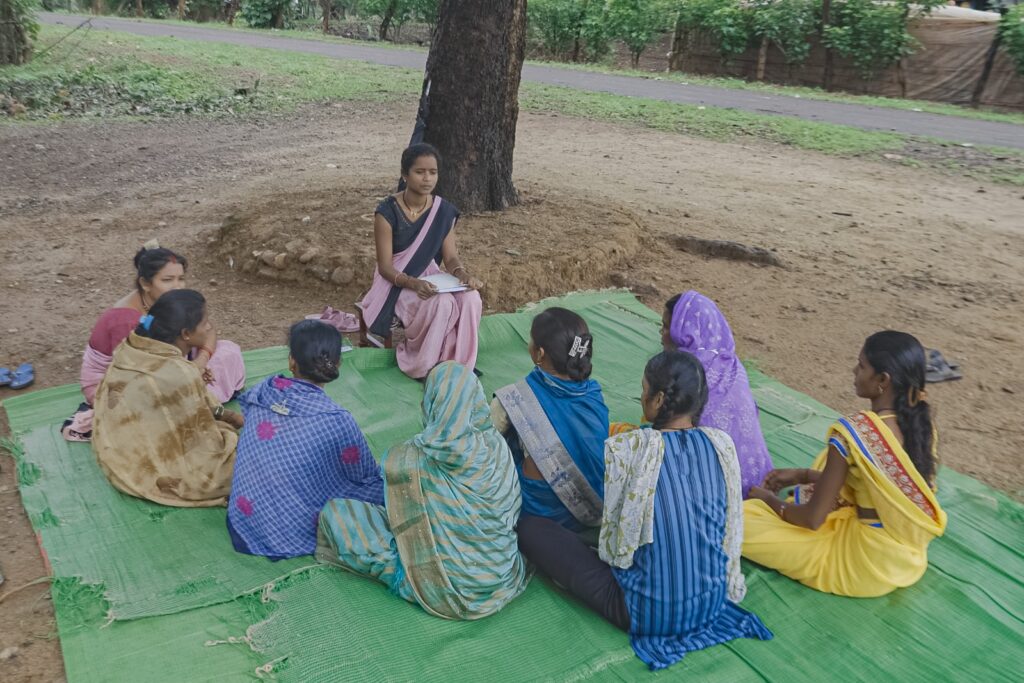
Over time, the conversations took collective form through what came to be known as Mata Samitis – groups of mothers who met, discussed, observed and gradually began participating in the life of the school. In time, school infrastructure itself entered those discussions.
It was in that setting that the broken roof in Bhima ceased to be something to endure and became a concern the mothers were prepared to act upon. What had begun as conversation was beginning to take the form of collective action.
Two Minutes With the Collector
In Bhima, the matter sharpened during the rains. Children continued to sit inside the classroom and study beneath the damaged roof. Then, during a lesson, part of the roof gave way. Pieces of concrete plaster fell into the open space between the teacher and the seated children while the lesson was underway. They missed both, but only just. For the women of the Mata Samiti, the danger had entered the classroom.
Lalitha Markan, a Mata Samiti member whose daughter, Divya, studies in Class III, spoke of it plainly.
“The chhat is broken,” she said, using the Hindi word for roof.
The women around her spoke with urgency. Each had seen rain enter the classroom, lessons disrupted through the monsoon, and now pieces of the roof had fallen where children sat. What had been a problem of disrepair had become a question of safety.
The mothers were faced with a decision: either withdrawing their children from school or pursuing another course of action.
The mothers chose the latter – taking the issue to the panchayat, the elected village council. They prepared a proposal and raised the matter collectively, but little followed.
Some time later, word spread that the District Collector would be visiting. Before the visit, the women spoke with village elders and agreed that the condition of the school must be raised when the Collector arrived.
When the day came, they stepped forward and called out with a request.
“Give us two minutes,” they said. “Just two minutes. Come see the school.”
He went with them. Standing beneath the damaged roof, they pointed upward and asked plainly, “Is it safe for our children to study here?” They showed how rain entered the classroom, how tiles had fallen, and how lessons had to shift from place to place.
Those two minutes, the women say, changed everything. Action followed. In time, the nearly 50-year-old school building was brought down and reconstructed.
The significance of the moment, however, lay beyond the repair itself. For the women involved, the episode became part of a larger understanding taking root through the Mata Samitis – that concerns affecting children’s learning could be raised collectively, pursued through public institutions and acted upon. For the children, the repaired school carried the memory of mothers who had stepped forward to secure it.
A Classroom That Reflects the Village
Members of the Mata Samiti now visit the school regularly. Some sit at the back of the classroom during activities. Others help organise drawing sessions, games and small performances in the courtyard.
During art sessions, they sometimes show children how animals and trees can be drawn in the style of Gond art – deer formed from lines and dots, birds perched along patterned branches, forests spreading across the page.
Songs from village festivals find their way into the classroom as well. Mothers teach children melodies they remember from celebrations and seasonal gatherings.
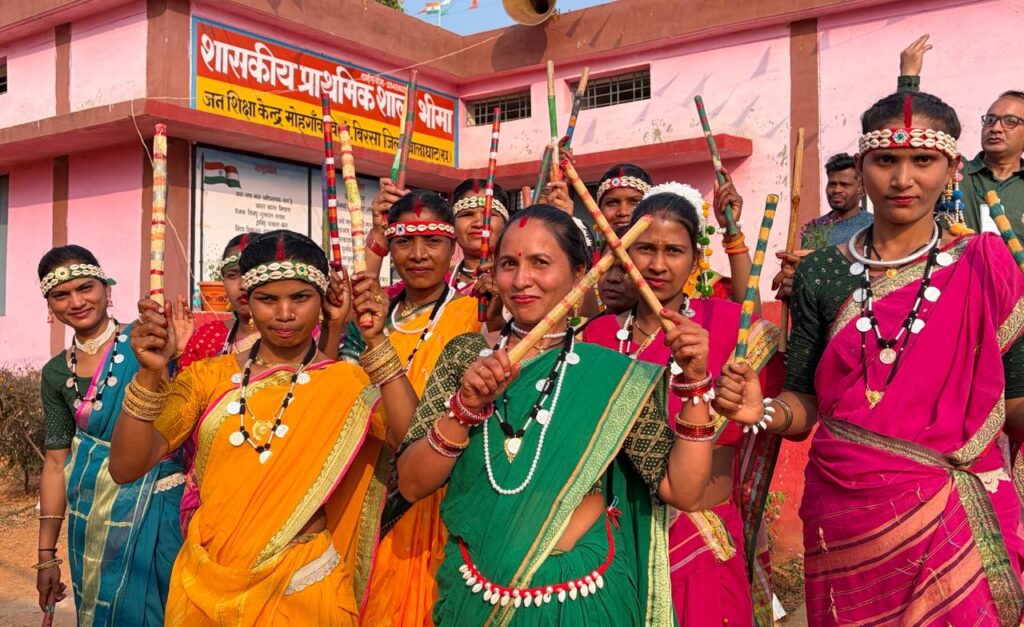
The forest surrounding the Kanha Tiger Reserve begins to appear in these lessons – in drawings, stories and songs. The classroom starts to reflect the place where the children live.
From the Classroom to the House
The conversations among the mothers did not end at the school gate. Some of the ideas that emerged in the Mata Samiti meetings began travelling into the houses themselves.
One of the first was simple. Children began keeping small savings in a gullak, a piggy bank. Coins from parents or visiting relatives now go into the container instead of disappearing immediately on sweets or small purchases. Some children like to shake the gullak gently and listen to the sound of the coins inside. Small practices like these begin to change everyday routines at home. School is no longer something that exists only in the classroom.
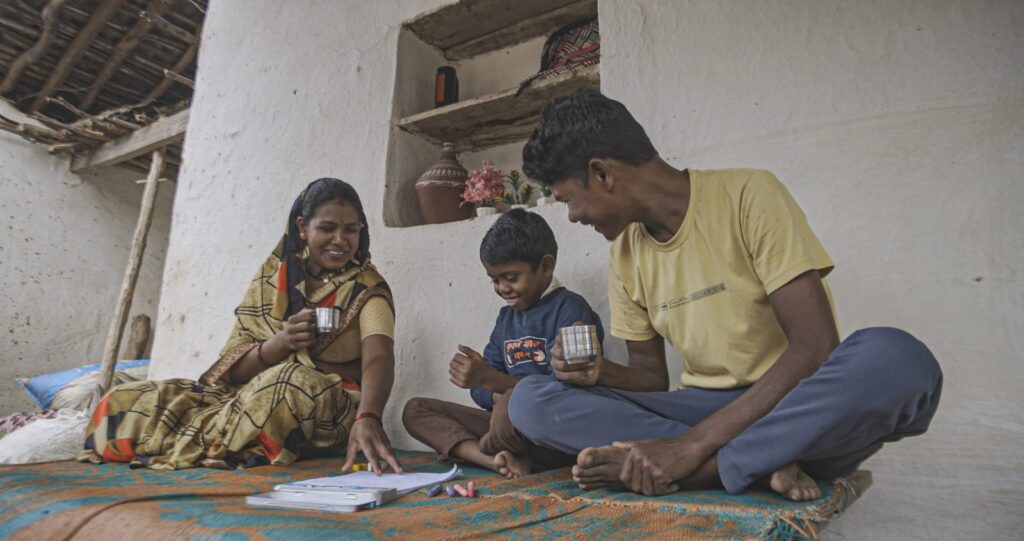
In the nearby Anjitala village, another Mata Samiti member, Sandhya, spoke about the conversations now taking place in her home. Her son, Aditya, is 8. Her younger daughter, also named Divya, is 3. These days the children sometimes talk about becoming IPS or IAS officers – members of the elite Indian Police and Administrative services that, for generations, have stood as a marker of upward mobility in rural India.
The younger Divya repeats the word ‘IPS” carefully, rolling the unfamiliar letters across her tongue. Sandhya laughs when she tells the story.
“She doesn’t know what it means yet,” Sandhya said.
Still, the word has entered the house. And in homes across the village, other dreams are beginning to find their way into conversation.
What Comes Next
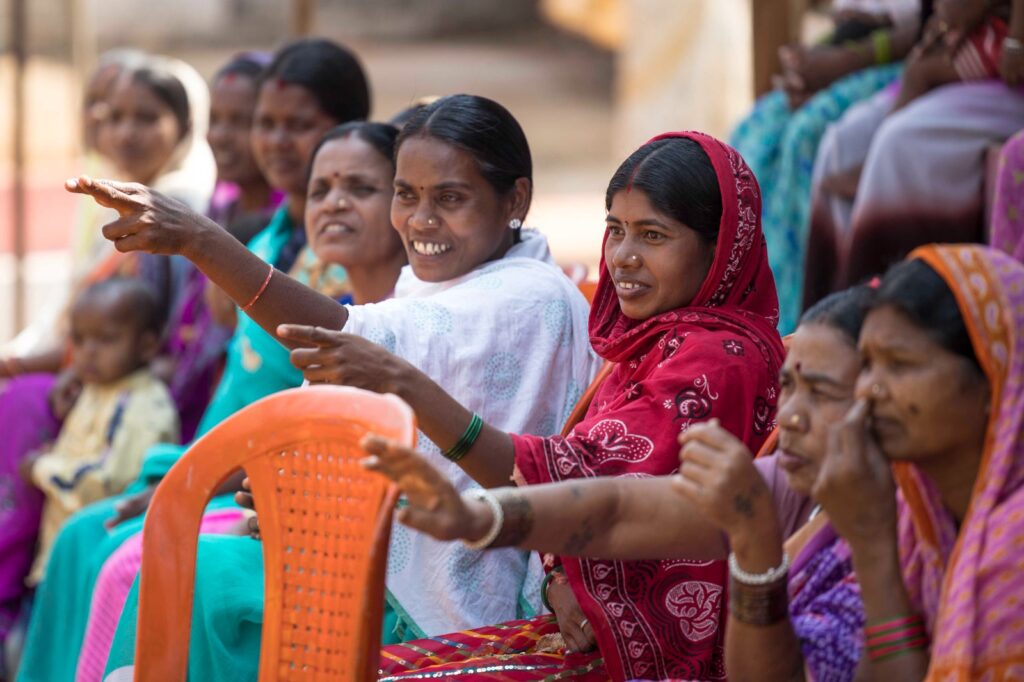
Today, 39 active Mata Samitis involving 907 mothers meet across villages in the Kanha landscape, and remain closely connected to the schools. Learning now moves through the village the way evening smoke does – from house to house, from courtyard to courtyard.
In Bhima and the neighbouring villages, the women are now asking for something more. They would like opportunities to learn by themselves – workshops, literacy sessions, and spaces where they can continue studying alongside their children. Women who first came together to discuss their children’s schooling are now asking what learning might mean for them as well.
With the right support, those possibilities can continue to grow across the villages of the Kanha landscape.